

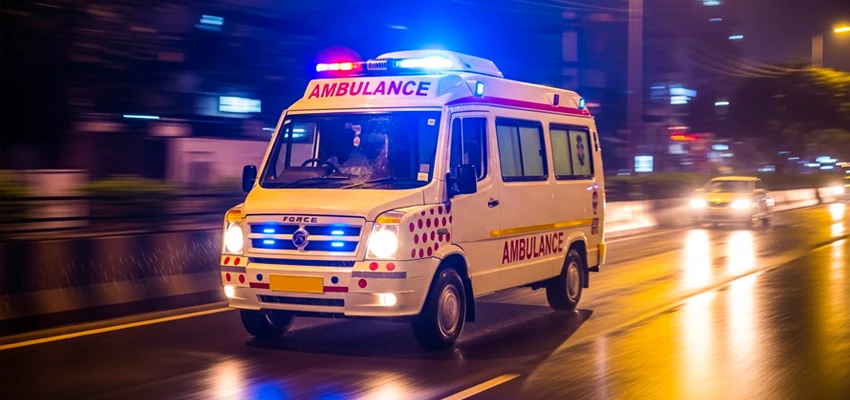
Medical emergencies can occur suddenly and without warning.
Medical emergencies can occur suddenly and without warning. Severe chest pain, stroke symptoms, or serious injuries may require immediate medical attention. In such situations, every minute matters. Calling an ambulance ensures trained medical professionals begin treatment quickly and safely transport the patient to the hospital.
1. Severe Chest Pain or Possible Heart Attack
Chest pain may indicate a heart emergency. Call an ambulance if the pain appears suddenly, feels severe, lasts several minutes, or spreads to the arm, neck, jaw, shoulder, or back. Other warning signs include shortness of breath, sweating, nausea, dizziness, or unusual fatigue.
2. Stroke Warning Signs - Act FAST
A stroke occurs when blood flow to the brain is interrupted. Early recognition is critical.
FAST Method:
- Face: One side of the face droops when smiling
- Arms: One arm feels weak or drifts downward
- Speech: Speech becomes slurred or difficult
- Time: Call emergency services immediately
Other symptoms may include sudden vision problems, severe headache, dizziness, or trouble walking.
3. Severe or Uncontrolled Bleeding
Heavy bleeding can quickly become life-threatening. Call an ambulance if bleeding does not stop with pressure, blood spurts from the wound, or the person shows signs of shock such as pale skin or dizziness.
Important: When in doubt, call 108 or your local emergency number immediately.